
Childcare in Charleston SC: What to Look for in Infant Daycare Programs

Childcare in Charleston SC: What to Look for in Infant Daycare Programs
Choosing infant daycare in Charleston, SC is a major parental decision. This guide highlights the most important factors—safety, staff, program quality, communication, and enrollment—so you can compare centers and choose what fits your family.
Key Takeaways
- Choosing the right infant daycare in Charleston, SC is important for early development.
- Prioritise engaging environments, qualified staff, and clear safety protocols.
- Top programs combine nurturing care with age‑appropriate learning activities.
- Infant services support motor, language, and social milestones.
- Licensed centers follow safety regulations and structured routines.
- Transparent communication — daily reports and meetings — builds trust.
- Enrollment normally requires forms, fees, and confirmation from the center.
- Bring documentation such as immunization records and birth certificates.
- Compare staff qualifications and parent feedback when evaluating centers.
Best Infant Daycare in Charleston SC: What Parents Should Know About Choosing Quality Childcare
Look for programs that balance safety, stimulation, and responsive caregiving. Three quick checks:
- Engaging Environment: Age‑appropriate toys, safe play areas, and sensory experiences.
- Qualified Staff: Trained caregivers with infant experience and up‑to‑date certifications.
- Safety Measures: Secure entry, clear illness policies, and emergency procedures.
Those basics create a stable setting that supports physical, emotional, and cognitive growth.
What Are the Key Features of Top Infant Daycare Programs in Charleston SC?
High‑quality infant programs consistently include a few core features:
- Safe and Nurturing Environment: Comfort, predictable routines, and close supervision.
- Academically Engaging Program: Short, playful activities that stimulate early learning.
- Daily Communication: Brief reports and open lines between caregivers and parents.
These elements help infants feel secure while they explore and learn.
How Do Infant Care Services Support Early Childhood Development?
Infant care supports milestones by offering responsive interactions and developmentally appropriate stimulation. Caregivers observe progress, encourage motor and language skills, and scaffold social experiences so infants are ready for later classroom routines.
What Curriculum Types Are Offered in Licensed Daycare Centers?
Licensed centers use simple, research‑informed approaches tailored to infants:
- Thematic Units: Short themes introduced through play and sensory activities.
- Developmental Focus: Activities matched to infants’ ages and abilities.
- Utilization of Standards: Many centers align with state or national early childhood guidelines.
Further research emphasizes the importance of carefully designed curricula that consider individual infant development rather than solely group activities.
Designing Quality Infant Daycare Curricula & Activities
The purpose of this study was to investigate the actual conditions and characteristics of weekly and daily child care programs for infants, to provide a basis for the improvement of infant care quality. The number of weekly activities should be planned considering infants’ interest as well as educational continuity of the activities. Among daily activities, on average of 66% of the time was planned for everyday life such as eating and napping. A curriculum composed of group activities ignoring infants’ individual developmental differences should not be encouraged.
The types of infant care curricula based on analysis of infants care plans, 2011
How Does The Sweetgrass School Ensure Safety and Well-Being in Infant Daycare?
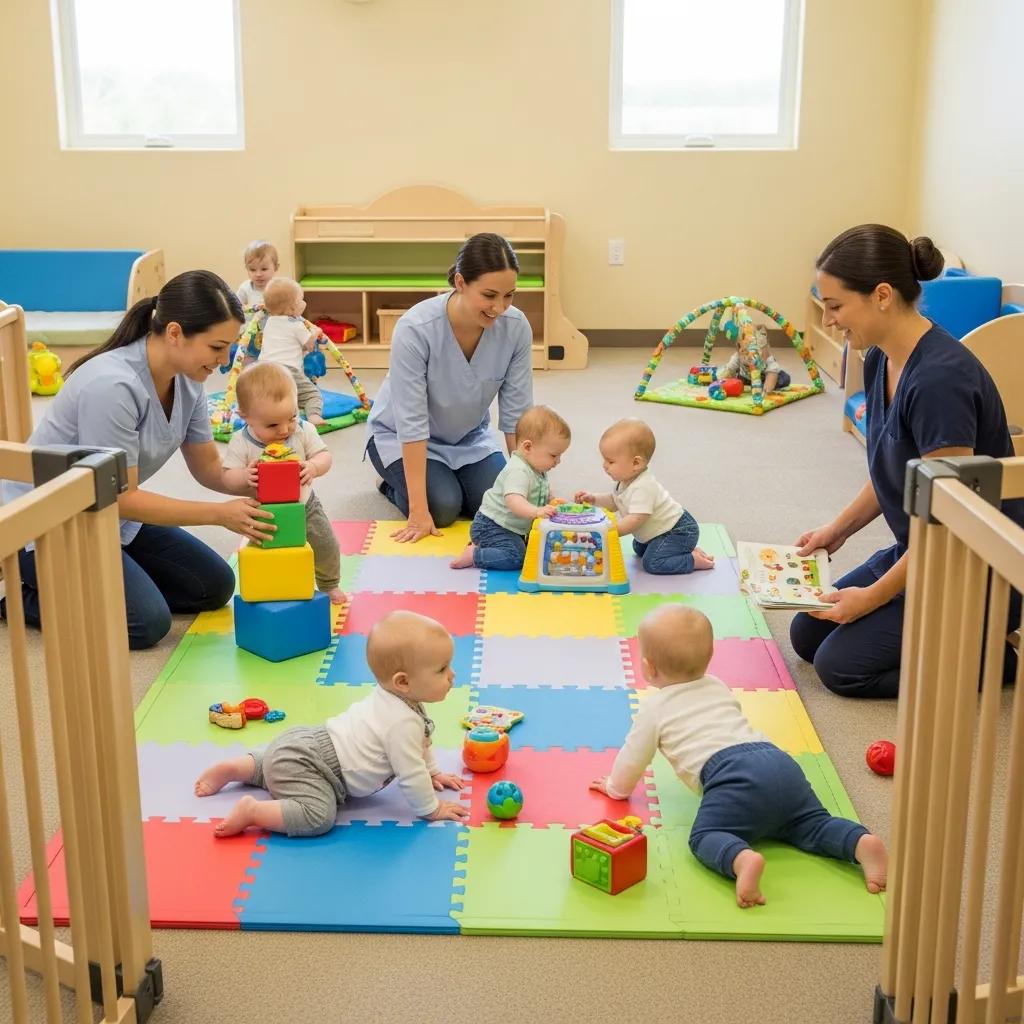
The Sweetgrass School emphasizes hygiene, monitoring, and ongoing staff training to keep infants safe and comfortable.
- Cleanliness and Hygiene: Regular sanitizing and handwashing routines.
- Safety Monitoring: Continuous supervision and secure spaces.
- Staff Training: Regular emergency and infant care training for caregivers.
These steps support a predictable, caring environment for infants.
What Safety Policies and Health Protocols Are in Place?
The Sweetgrass School maintains written policies and routines that reduce infection risk and prepare staff for emergencies.
- Daily Cleaning: Frequent cleaning of surfaces and toys.
- Illness Policy: Clear guidance on when children should stay home.
- Safety Measures: Regular drills and routine health checks.
Such protocols protect infants and help parents understand expectations.
Despite robust protocols, studies highlight common non-compliance issues in daycare safety regulations, underscoring the need for continuous vigilance.
Infant Daycare Safety: Common Non-Compliance Issues
Among the 746 FDCH inspections, we found high rates of non-compliance in inspection regulations in immunizations (32.9 %), water temperature (35.6 %) and hazards (30.0 %). Among the 11 regulation categories, 4 categories (indoor safety, emergency preparedness, child/family/staff documentation, and qualifications of provider) had regulations with high non-compliance. The majority of FDCH were in compliance with the majority of regulations, yet there are glaring non-compliance issues in inspections and re-inspections.
Health and safety in family day care homes: Association between regulatory non-compliance and lower median income, S Jeon, 2016
How Is Transparent Parent Communication Maintained?
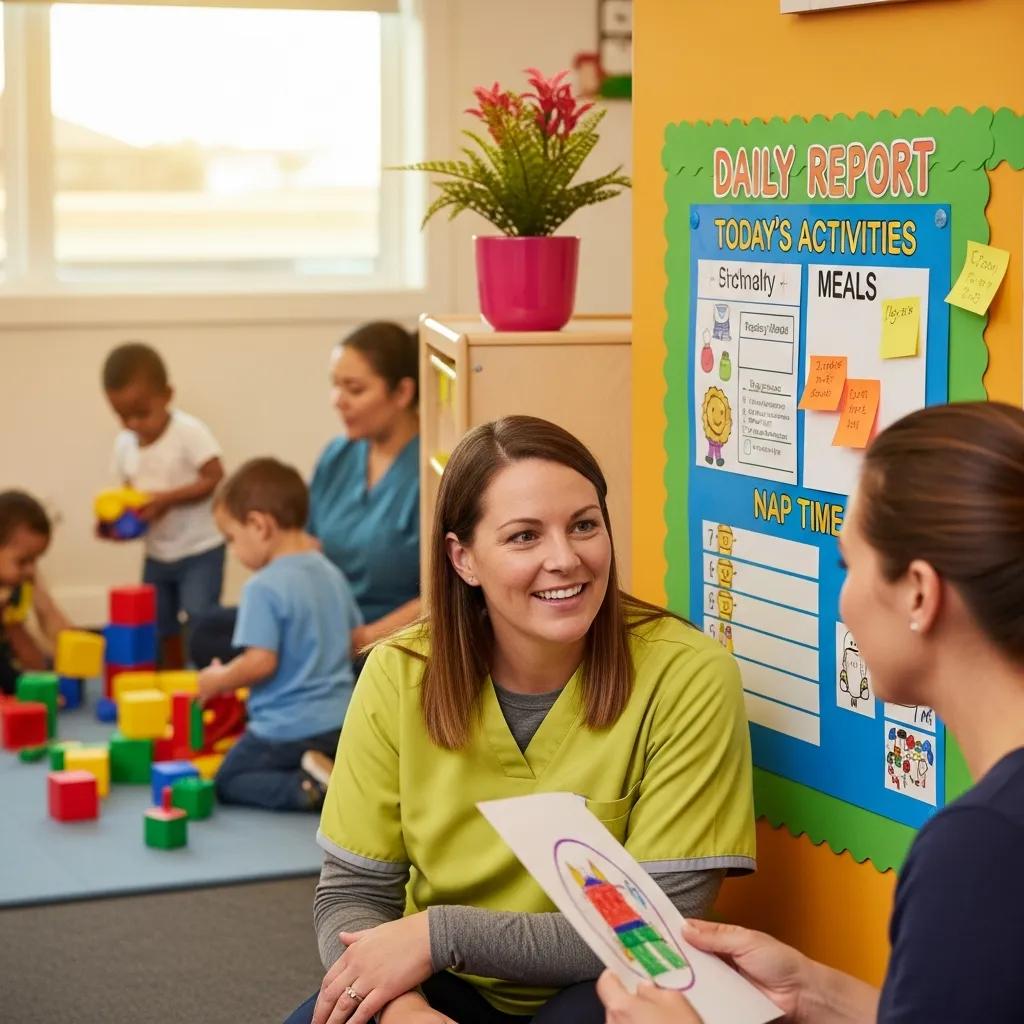
The Sweetgrass School uses concise updates and regular contact to keep families involved.
- Daily Reports: Short summaries of sleep, feeding, and activities.
- Face-to-Face Contact: Regular check‑ins and an open‑door approach.
- Feedback from Parents: Opportunities for parents to share concerns and suggestions.
Clear updates build trust and support consistent care.
To learn more about how The Sweetgrass School maintains transparent communication, visit their website.
What Is the Enrollment Process for Infant Daycare Programs in Charleston SC?
Enrollment typically follows a short sequence of form, fee, and confirmation steps.
- Application Form: Complete the center’s application to start the process.
- Application Fee: Pay any non‑refundable fee required to hold a spot.
- Confirmation Process: Wait for the center’s confirmation of placement.
Follow any center‑specific directions to complete registration.
Which Steps Should Parents Follow to Register Their Infant?
Registration mirrors the enrollment steps but focuses on completing required paperwork and payment.
- Complete Application Form: Provide accurate contact and care details.
- Pay Application Fee: Submit the fee to secure the application.
- Wait for Confirmation: Receive final placement details from the center.
Completing these three items typically finalizes registration.
What Documentation and Age Requirements Are Needed?
Prepare basic documents and confirm the center’s accepted age range in advance.
- Age Range for Enrollment: Most centers accept infants from six weeks to 12 months.
- Required Documentation: Bring immunization records, birth certificate, and emergency contacts.
- Application Fee: Be ready to pay any required processing fee.
Having paperwork ready speeds enrollment and reduces delays.
Why Choose Licensed Infant Daycare Centers in Charleston and Mount Pleasant SC?
Licensed centers offer predictable standards and accountability.
- Safety and Security: Compliance with state safety and health rules.
- Qualified Staff: Trained caregivers and required certifications.
- Structured Programs: Consistent routines that support milestones.
These advantages make licensed centers a reliable choice.
What Are the Benefits of Licensed Childcare Programs?
Licensed programs provide regulated care with features helpful to families.
- Engaging Environment: Stimulating activities for development.
- Flexible Enrollment Options: Part‑time, full‑time, or extended hours may be available.
- Meals Included: Many centers provide nutritious meals and snacks.
Combined, these services support infants and simplify routines for parents.
How Do Local Centers Compare in Quality and Services?
Compare centers by staff ratios, services offered, and parent experience.
- Quality of Care: Check caregiver-to-infant ratios and staff training.
- Services Offered: Look for extended hours, meals, and enrichment options.
- Parent Feedback: Talk to current families and read reviews.
Balanced comparisons help you choose the best match for your child.
Studies confirm that key indicators of quality childcare, such as caregiver-to-child ratios and caregiver sensitivity, are crucial for positive developmental outcomes.
Key Indicators of Quality Infant Childcare: Ratios & Sensitivity
The current study provides a systematic examination of child care quality around the globe, using the Environment Rating Scales (ERS). Additional goals of this study are to examine associations between ERS process quality and structural features (group size, caregiver–child ratio) that underpin quality and between ERS and more proximal aspects of child care quality (caregiver sensitivity). Our results suggest that ERS scores are related to indicators of proximal quality of care (caregiver sensitivity) and, to a lesser degree, structural quality of care (caregiver–child ratio).
Quality of child care using the environment rating scales: A meta-analysis of international studies, MH van IJzendoorn, 2016
For more information on programs at The Sweetgrass School, visit their website.
If you’re interested in registering your child, The Sweetgrass School offers a straightforward process.
Frequently Asked Questions
What should I look for in a daycare's safety protocols?
Confirm secure entry, visible safety equipment, regular drills, and a clear illness policy. Ask how the center handles contagious illness and emergency response.
How can I ensure my child is receiving adequate developmental support?
Choose centers that describe age‑appropriate activities and milestone tracking. Ask for examples of daily routines that promote motor, language, and social skills.
What types of meals are typically provided in daycare programs?
Most centers offer balanced infant meals and snacks. Check menus for fruits, vegetables, whole grains, and how allergies or special diets are managed.
Are there flexible scheduling options available at daycare centers?
Many centers provide part‑time, full‑time, and extended‑hour options. Confirm hours, fees for extended care, and drop‑in availability.
How do daycare centers support socialization among infants?
Caregivers use short, guided group activities and supervised playtimes to encourage sharing, interaction, and basic communication skills.
What should I do if I have concerns about my child's daycare experience?
Talk directly with the caregiver or director, request a meeting, and document your observations. Most centers welcome feedback and will work with you to resolve issues.
How can I prepare my child for the transition to daycare?
Introduce daycare gradually, visit the center, talk positively about caregivers and activities, and arrange short trial days if possible to ease the transition.
Conclusion
Choosing the right infant daycare in Charleston, SC means prioritising safety, qualified caregivers, and consistent communication. Prepare required documents, review programs carefully, and visit centers to find the best fit for your family.