
Infant Development Milestones by Age

Infant Development Milestones by Age: Key Baby Developmental Stages and Parental Guidance
Understanding the developmental milestones of infants is essential for parents to ensure their child’s growth is on the right track. Each stage of early life is marked by significant advancements in various skills that may include motor coordination, cognitive abilities, and social interactions. This comprehensive guide offers insights into the key developmental milestones by age, helping parents support their child’s journey from newborn to toddler. By recognizing these milestones, parents can address any potential delays and promote healthy development through engaging activities and appropriate nutrition. This article will cover the developmental markers for newborns to 12 months, signs of potential delays, and how parents can effectively support and track progress throughout each stage.
What Are the Newborn to 3 Months Developmental Milestones?
During the first three months of life, newborns undergo rapid growth and development. Key physical milestones during this time relate primarily to reflexes and sensory capabilities, while early emotional and social behaviors begin to appear. Parents should be attentive to the changes signifying health and development during this crucial period.
Which Motor Skills and Reflexes Should Newborns Exhibit?
Newborns typically exhibit several important motor skills and reflexes that indicate their developing physical capabilities. These include the grasp reflex, where an infant instinctively grips objects placed in their hand. Additionally, they begin to show head control, lifting their head briefly when lying on their stomach. A significant reaction is the rooting reflex, where babies turn their head in response to cheek stimulation, promoting feeding.
How Do Sensory and Social Behaviors Develop in Early Infancy?
Sensory development starts robustly in these early weeks. Newborns can track moving objects, although vision is primarily blurry. Auditory responses also develop as they begin to react to familiar sounds, including voices. Socially, the emergence of the social smile around six to eight weeks marks a critical emotional development stage, fostering bonding experiences with caregivers.
Which Key Milestones Occur Between 4 and 6 Months of Age?
As infants grow, the 4 to 6-month period is characterized by more pronounced milestones in physical growth, communication, and cognitive skills. This stage lays the groundwork for further development as infants become more engaged with their surroundings.
How Does Infant Motor Skills Development Advance at 4 to 6 Months?
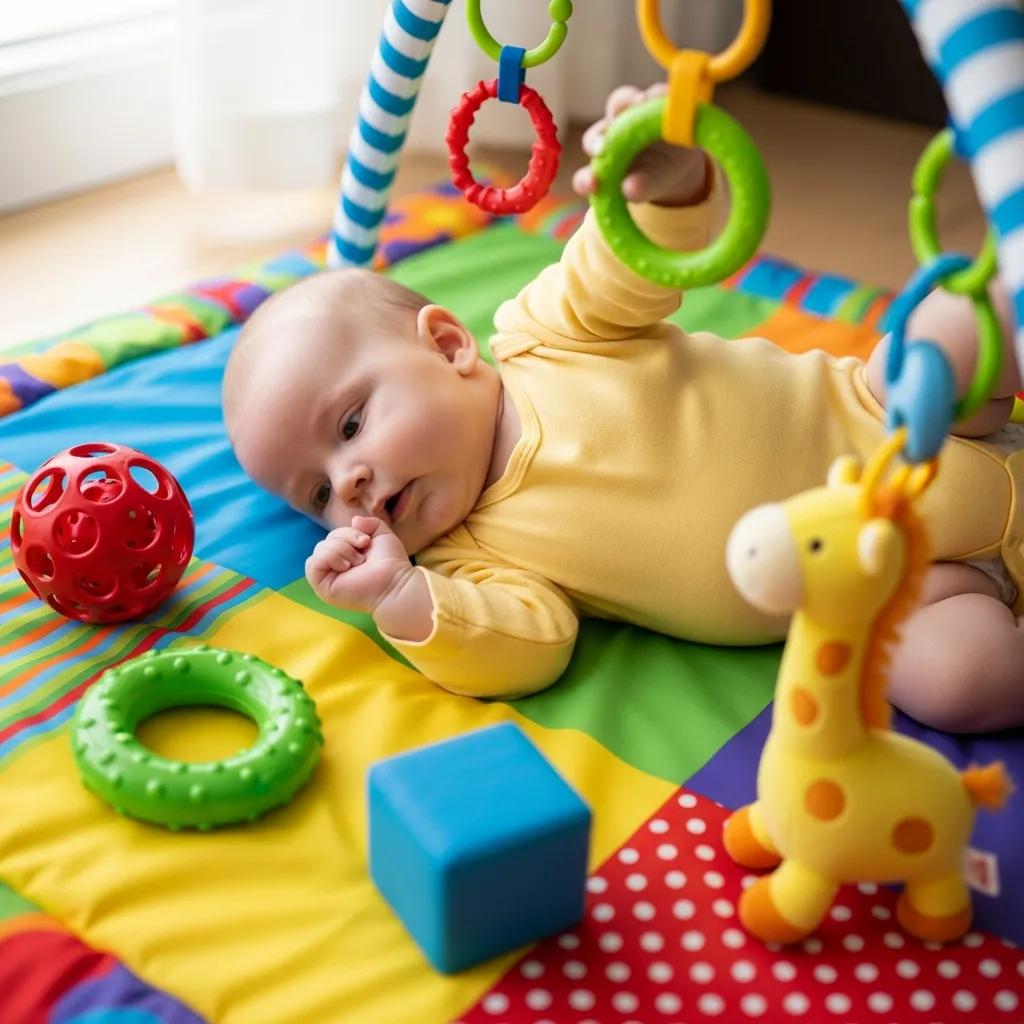
Between 4 and 6 months, motor skills develop significantly. Infants typically start to roll over, demonstrating increasing mobility. By this age, many infants can also sit with support and show readiness for crawling. Fine motor skills begin to emerge as they actively grasp and shake objects, enhancing their understanding of the world around them.
The home environment plays a critical role in fostering these early motor advancements.
Home Environment’s Impact on Infant Motor Development
ABSTRACT: AbstractThe home environment plays a very important role in the process of infant motor development. The home environment that supports the baby’s motor development does not only come from the physical aspect of the house itself, but there are emotional and social aspects. Where the involvement of parents in the process of playing and interacting with their babies plays a very important role. This study aims to explore the influence of the home environment on the motor development of babies aged 6-24 months. Through a qualitative approach with phenomenological methods, data were collected from interviews with six parents who had babies in that age range. The results of the study show that a safe and supportive home environment has a great influence on the motor development of babies. Key findings include the importance of adequate playgrounds, parental supervision, and positive interactions between parents and babies. In addition, factors that hinder motor development were also identif The Effect Of Home Environment On The Motor Development Of Babies 6-24 Months, 2024
What Are the Cognitive and Speech Indicators in These Months?
Cognitive development blossoms during these months, with notable progress in communication. Infants may start cooing and babbling, experimenting with vocal sounds. They begin to show recognition of their names and respond to simple verbal cues. Emotional expressions also become more varied, indicating advancements in social engagement and recognition of facial cues.
What Are Typical Infant Development Milestones from 7 to 12 Months?
The period from 7 to 12 months is critical as infants inch closer to toddlerhood. This phase is marked by significant advances in mobility, cognitive processing, and social-emotional skills.
Which Motor Skills Develop as Infants Approach Toddler Stage?
As they approach their first birthday, most infants can stand unaided and take their first steps. Their motor skills become more refined, allowing for the ability to crawl with ease and manipulate objects with increasing dexterity. Activities like pulling themselves up on furniture also indicate growth in strength and coordination.
How Do Cognitive and Social-Emotional Skills Evolve in This Period?
Cognitive development includes the formation of early problem-solving skills, as infants begin to understand the concept of object permanence. Socially, they engage more with others through gestures and expressions, forming bonds with caregivers and recognizing familiar faces. Awareness of emotions also starts to develop, as infants may show anxiety around strangers or express joy when interacting with loved ones.
What Are Early Signs of Developmental Delay in Infants?
Identifying early signs of developmental delays is crucial for ensuring that infants receive the necessary support. Monitoring their progress and being aware of typical milestones can help parents recognize potential concerns in their child’s growth trajectory.
Which Behavioral and Motor Signs May Indicate Delays?
Indicators of developmental delays can include a lack of movement or lack of response to stimuli. For instance, if an infant does not roll over by six months, it may signal a delay in motor skills. Additionally, if a child does not exhibit social smiles or respond to caregivers’ voices by three months, these may be cause for concern.
When Should Parents Seek Professional Evaluation and Early Intervention?
Parents should consider professional evaluation if they observe significant delays in developmental milestones. Guidelines recommend seeking advice if an infant displays unusual behaviors such as lack of interest in play or fails to react to their name by twelve months. Early intervention is key to addressing potential delays effectively, enhancing developmental outcomes.
How Can Parents Support Healthy Infant Development at Each Stage?

Parents play a pivotal role in their child’s development. Engaging in interactive activities and providing necessary nutrition can greatly enhance growth across all milestones.
What Activities Promote Motor Skill and Cognitive Growth?
Interactive play is essential for promoting both motor skills and cognitive development. Activities like tummy time encourage infants to strengthen neck and shoulder muscles. Reading together fosters language recognition and cognitive engagement, while interactive games that involve movement can support physical development.
How Does Nutrition and Health Influence Developmental Progress?
Nutrition plays a vital role in an infant’s growth. Breast milk or infant formula offers essential nutrients for early growth while introducing solid foods at around six months can enhance cognitive and motor skill development. Parents should focus on providing balanced meals rich in vitamins and minerals to support optimal development.
How Can Parents Track and Measure Infant Milestones Effectively?
Keeping track of developmental milestones can help parents ensure their children are growing and developing as expected. Effective tracking allows for early identification of any discrepancies.
What Are Reliable Checklists for Baby Developmental Stages?
Using developmental checklists can assist parents in understanding and tracking their child’s progress. Reliable sources include pediatrician-recommended lists that outline age-based milestones, providing a straightforward framework for monitoring growth in various domains, including motor, cognitive, and social-emotional skills.
Parental involvement in tracking developmental milestones is crucial for early detection of potential delays and necessary interventions.
Parental Tracking of Infant Developmental Milestones for Early Detection
Parents’ tracking of developmental milestones can assist healthcare providers with early detection of developmental delays and appropriate referrals to early intervention. Crowdsourcing is one way to update the content and age data distribution of developmental checklists for parents and providers. This feasibility study examined which developmental milestones parents chose to track and what they added beyond traditional milestones, using the babyTRACKS crowd-based mobile app. The feasibility of a crowd-based early developmental milestone tracking application, A Ben-Sasson, 2022
How to Use Technology and Professional Resources for Monitoring?
Technology can enhance the monitoring of developmental milestones. Various apps now allow parents to log their child’s achievements and receive tailored guidance based on individual growth patterns. Parents are also encouraged to maintain regular appointments with pediatricians, who can provide additional resources and early intervention strategies as needed.