
Focuses on retelling, sequencing, and young child-authored stories rather than duplicating the broad early-literacy article. The topic becomes most useful when adults translate the idea into visible rhythms and precise prompts.
For parents in Mount Pleasant, South Carolina, this topic belongs inside a larger decision: whether daily care feels understandable, responsive, and aligned with the family’s needs. The Sweetgrass School serves children from six weeks through age five, so the same idea may look different in an infant room, a toddler group, a preschool classroom, or Pre-K. This guide offers observation points and conversation starters, not promises about an individual child.
Why this question deserves a closer look
Focuses on retelling, sequencing, and young child-authored stories rather than duplicating the broad early-literacy article. Existing literacy post is broad; this provides a distinct narrative-language angle. The strongest answer comes from combining a family’s knowledge of the young child with the teaching team’s what adults notice across real rhythms. One isolated morning, activity, meal, or transition rarely tells the whole story.
Retelling strengthens sequence
CHILDREN organize who, where, what happened, and what came next when they revisit an experience. When home and school exchange precise information, both settings can respond with more context and fewer assumptions.
HOUSEHOLDS can observe retelling strengthens sequence by looking for how oral storytelling appears across ordinary rhythms, then sharing one precise example rather than a broad judgment. That distinction matters because young children learn through repeated experience, not through a single perfect performance.
In a preschool setting, adults can connect retelling strengthens sequence with this guidance: children organize who, where, what happened, and what came next when they revisit an experience. They can model one step, allow practice, and adjust support from what they actually see. FAMILIES can look for the pattern across several days and share concrete what adults notice with the teaching team.
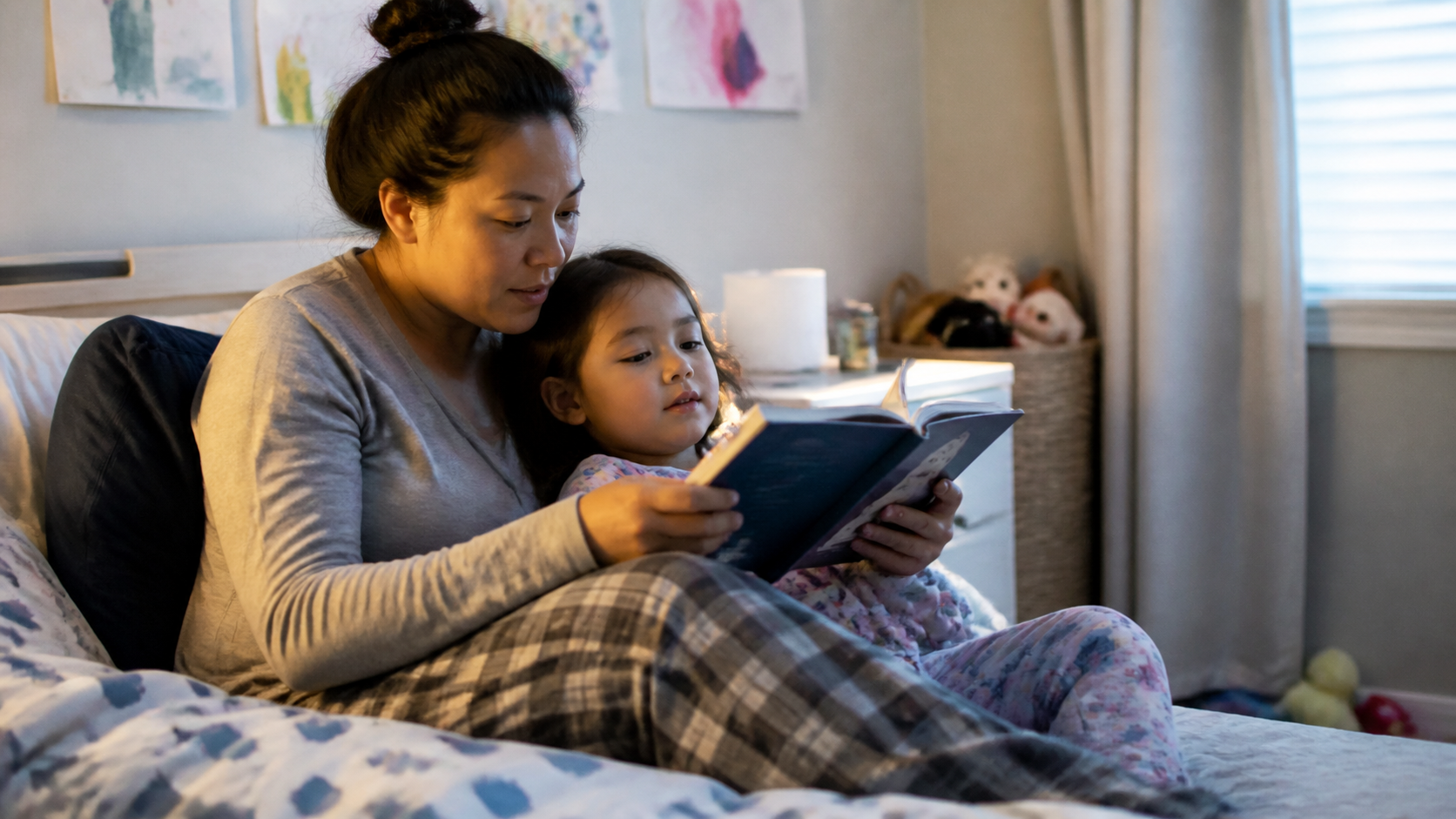
Wordless books invite original language
Pictures provide shared context without limiting the young child to memorized text. The practical goal is a routine that adults can repeat consistently while still responding to the individual young child.
HOUSEHOLDS can observe wordless books invite original language by looking for how oral storytelling appears across ordinary rhythms, then sharing one precise example rather than a broad judgment. A useful next step is small enough to try, observe, and adjust without turning the moment into a test.
In a preschool setting, adults can connect wordless books invite original language with this guidance: pictures provide shared context without limiting the young child to memorized text. They can model one step, allow practice, and adjust support from what they actually see. This keeps the focus on connection and participation rather than comparison with another young child.
Props make ideas visible
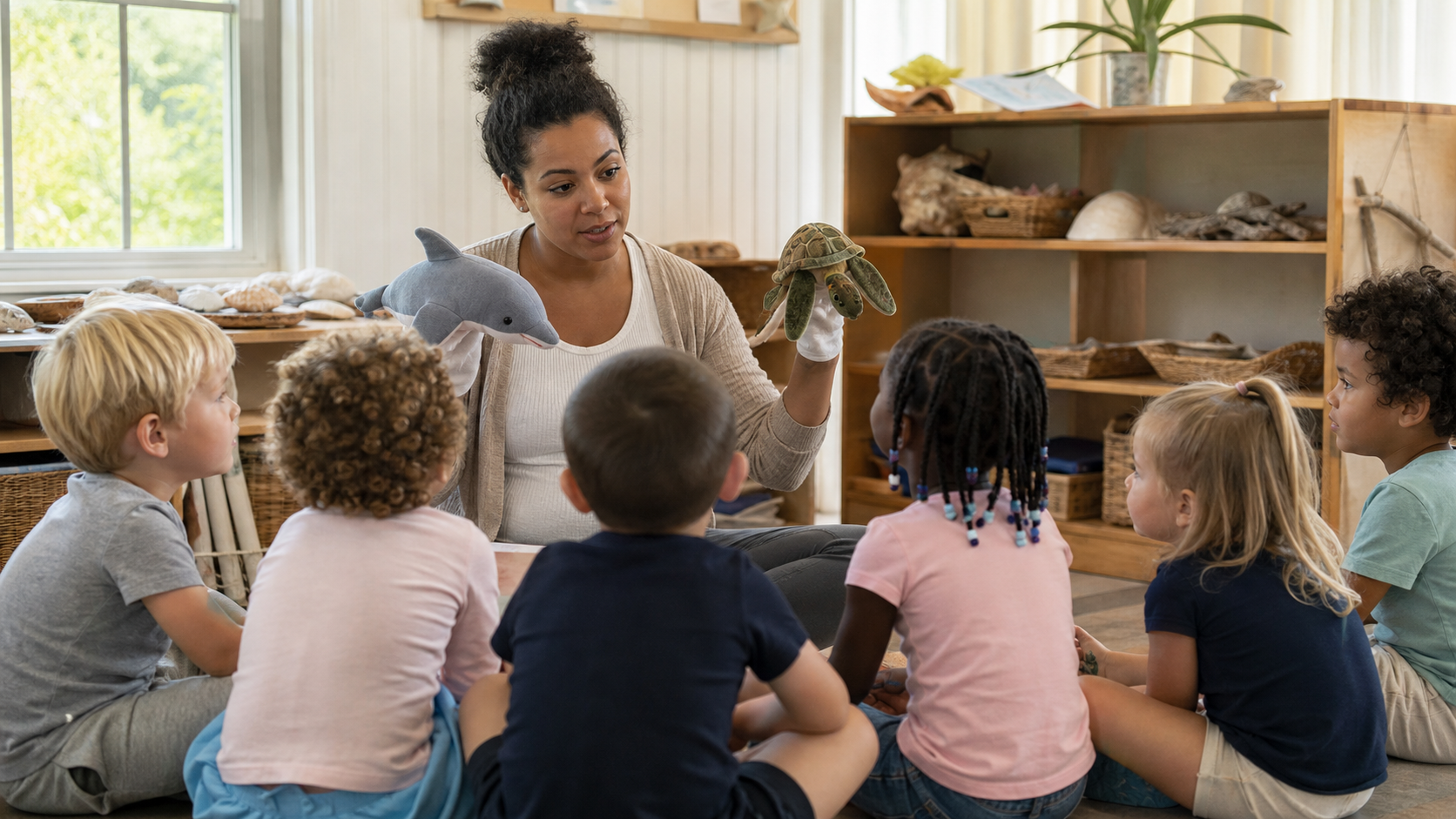
Puppets, objects, and drawings help children hold characters and events in mind. When home and school exchange precise information, both settings can respond with more context and fewer assumptions.
HOUSEHOLDS can observe props make ideas visible by looking for how oral storytelling appears across ordinary rhythms, then sharing one precise example rather than a broad judgment. That distinction matters because young children learn through repeated experience, not through a single perfect performance.
In a preschool setting, adults can connect props make ideas visible with this guidance: puppets, objects, and drawings help children hold characters and events in mind. They can model one step, allow practice, and adjust support from what they actually see. FAMILIES can look for the pattern across several days and share concrete what adults notice with the teaching team.
Adults can extend without taking over
Use prompts that invite detail while accepting the young child’s version and home language. The practical goal is a routine that adults can repeat consistently while still responding to the individual young child.
HOUSEHOLDS can observe adults can extend without taking over by looking for how oral storytelling appears across ordinary rhythms, then sharing one precise example rather than a broad judgment. A useful next step is small enough to try, observe, and adjust without turning the moment into a test.
In a preschool setting, adults can connect adults can extend without taking over with this guidance: use prompts that invite detail while accepting the young child’s version and home language. They can model one step, allow practice, and adjust support from what they actually see. This keeps the focus on connection and participation rather than comparison with another young child.
FAMILY stories connect identity and vocabulary
Everyday accounts about relatives, meals, trips, and rhythms give words emotional meaning. When home and school exchange precise information, both settings can respond with more context and fewer assumptions.
HOUSEHOLDS can observe family stories connect identity and vocabulary by looking for how oral storytelling appears across ordinary rhythms, then sharing one precise example rather than a broad judgment. That distinction matters because young children learn through repeated experience, not through a single perfect performance.
In a preschool setting, adults can connect family stories connect identity and vocabulary with this guidance: everyday accounts about relatives, meals, trips, and rhythms give words emotional meaning. They can model one step, allow practice, and adjust support from what they actually see. FAMILIES can look for the pattern across several days and share concrete what adults notice with the teaching team.
PROMPTS households can use
What should households notice about retelling strengthens sequence?
CHILDREN organize who, where, what happened, and what came next when they revisit an experience. The practical goal is a routine that adults can repeat consistently while still responding to the individual young child. If the question depends on a young child’s health, development, or an individual program policy, ask the appropriate qualified professional or the school directly.
How can a group-care setting support oral storytelling?
HOUSEHOLDS can observe wordless books invite original language by looking for how oral storytelling appears across ordinary rhythms, then sharing one precise example rather than a broad judgment. A useful next step is small enough to try, observe, and adjust without turning the moment into a test. If the question depends on a young child’s health, development, or an individual program policy, ask the appropriate qualified professional or the school directly.
Which details belong in a caregiver-teacher check-in?
In a preschool setting, adults can connect props make ideas visible with this guidance: puppets, objects, and drawings help children hold characters and events in mind. They can model one step, allow practice, and adjust support from what they actually see. This keeps the focus on connection and participation rather than comparison with another young child. If the question depends on a young child’s health, development, or an individual program policy, ask the appropriate qualified professional or the school directly.
Putting the guidance into practice
A practical close look 1
Choose one ordinary moment connected with oral storytelling. Write down only what can be observed: the setting, the child’s action, the adult response, and what happened next. Repeat the observation on another day before drawing a conclusion. This simple discipline makes parent-teacher conversations more precise, protects the child from broad labels, and creates a reasonable basis for deciding whether to continue, adjust, or seek qualified guidance.
A practical close look 2
Choose one ordinary moment connected with oral storytelling. Write down only what can be observed: the setting, the child’s action, the adult response, and what happened next. Repeat the observation on another day before drawing a conclusion. This simple discipline makes parent-teacher conversations more precise, protects the child from broad labels, and creates a reasonable basis for deciding whether to continue, adjust, or seek qualified guidance.
A practical close look 3
Choose one ordinary moment connected with oral storytelling. Write down only what can be observed: the setting, the child’s action, the adult response, and what happened next. Repeat the observation on another day before drawing a conclusion. This simple discipline makes parent-teacher conversations more precise, protects the child from broad labels, and creates a reasonable basis for deciding whether to continue, adjust, or seek qualified guidance.
Connect the idea to a program visit
During a tour or parent conversation, ask for examples instead of a rehearsed yes-or-no answer. What might an adult say? What happens next? How is information shared with a family? The answers help parents understand the process while leaving room for age, temperament, and daily variation.
Families considering care in Mount Pleasant can use the links below to review the program connected with this topic, understand the broader school approach, and prepare focused questions before contacting the team.
- Review the Sweetgrass Preschool information
- Explore related Sweetgrass guidance
- Contact The Sweetgrass School
Next step for oral storytelling: Review the relevant Sweetgrass program and contact The Sweetgrass School to ask how the ideas in this guide are handled in the current group-care setting and enrollment process.