
Part-Time and Full-Time Child Care Options

Part-Time and Full-Time Child Care Options: Comprehensive Guide for Parents Seeking Licensed, Affordable Daycare and Preschool Programs
By Sweetgrass School, The Sweetgrass School
Selecting the right childcare option is crucial for parents navigating the busy landscape of family life. With the increasing number of families with working parents, understanding the distinctions between part-time and full-time childcare services has become essential. This guide explores the various childcare options available, focusing on licensed and affordable daycare and preschool programs. Parents will gain insights not just into availability, but also the developmental benefits and safety aspects of these services. By the end of this article, you will be equipped to make informed decisions regarding childcare that align with both your budget and your child’s needs. We’ll cover the key differences between part-time and full-time care, how to choose quality providers, affordable options and subsidies, preschool programs, and safety standards.
What Are the Key Differences Between Part-Time and Full-Time Child Care Options?
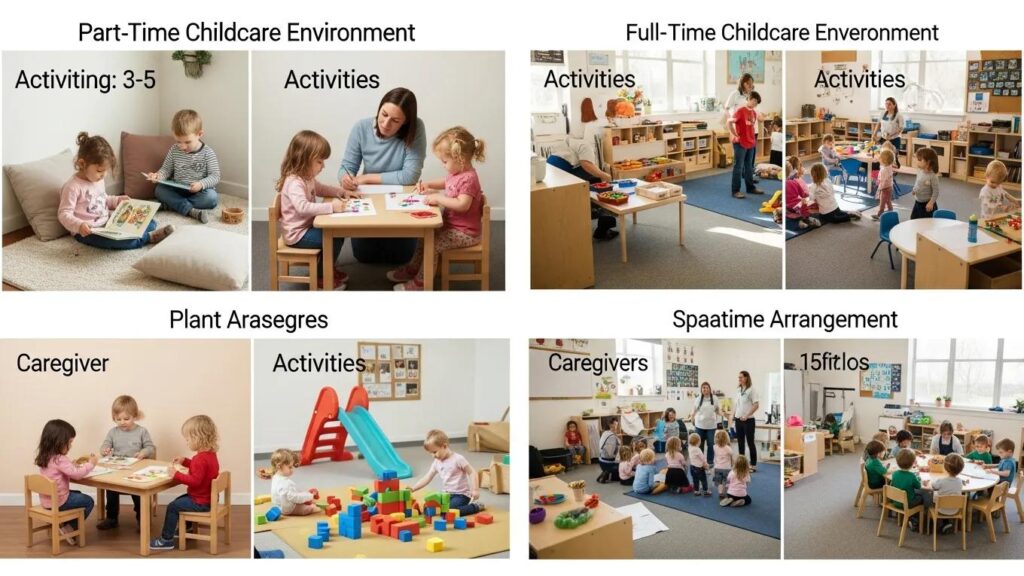
Part-time and full-time childcare options cater to different scheduling needs for families, influencing the child’s daily structure. Part-time childcare typically refers to care provided for a few hours across several days, while full-time childcare usually encompasses care for the entirety of a weekday, typically 8-10 hours. This distinction affects various aspects of child development, routine, and family flexibility. Understanding these differences is critical as they shape how children interact socially and emotionally in varying environments.
How Do Typical Schedules Differ Between Part-Time and Full-Time Care?
Parents considering part-time vs. full-time childcare often face crucial decisions regarding their child’s routine. Part-time schedules may include drop-off and pick-up times that align with the parent’s work commitments. Common time slots for part-time care range from 8 AM to noon, or 1 PM to 5 PM, allowing flexibility for those with varied work hours or who may not require full-day service.
In contrast, full-time care usually operates from the early morning until evening, covering standard work hours. For instance, a full-time childcare program might run from 7 AM to 6 PM, providing children with a stable routine that can enhance their socialization and learning experiences through prolonged exposure to structured activities.
What Are the Developmental Benefits of Each Care Type?
Imparting distinct experiences, part-time and full-time childcare cater to various developmental needs. Part-time care can offer targeted skills development, emphasizing socialization, sharing, and foundational academic skills through shorter, more intensive sessions. Children in part-time programs can also benefit from a more flexible transition to schooling, particularly if kindergarten is on the horizon.
Conversely, full-time childcare provides children with an immersive experience, allowing for deeper relationships with caregivers and peers. The consistent environment supports continual learning and emotional development, equipping children with the skills needed to navigate different social contexts more adeptly. Prolonged interaction in diverse play and educational settings fosters resilience and adaptability.
How to Choose Licensed Childcare Providers and Daycare Centers Near Me?
Choosing a licensed child care provider involves evaluating several key factors that ensure quality, safety, and educational standards. Licensed childcare centers are required to adhere to state regulations, ensuring a level of accountability that unlicensed facilities might lack, making this an essential consideration.
What Licensing Standards Ensure Child Safety and Quality?

Licensing standards for childcare providers often include regular inspections and compliance with specific health and safety regulations designed to safeguard children’s well-being. Key safety protocols include background checks for staff, child-to-caregiver ratios, fire safety measures, and proper immunization documentation. Moreover, establishments often undergo regular audits to ensure they meet the requisite standards, providing parents with peace of mind regarding their child’s safety.
How to Verify the Credentials and Reputation of Local Providers?
Verification of childcare providers entails researching and cross-referencing multiple resources, including online reviews, state databases for compliance records, and personal recommendations from other parents. Potential avenues for research include:
- State Licensing Databases: Check for up-to-date licensing information and history of any violations.
- Online Reviews: Websites and parenting forums can provide firsthand accounts from other parents.
- Interviews: Engaging potential caregivers through interviews about their qualifications, experience, and philosophy can further reveal valuable insights.
What Are Affordable Childcare Options and How Can Families Access Subsidies?
Affordable childcare remains a crucial concern for many families, especially those navigating limited budgets. Understanding available financial assistance options ensures that quality care is accessible without incurring excessive costs.
Which Childcare Subsidy Programs Are Available and Who Is Eligible?
Various childcare subsidy programs are operational to assist families in offsetting childcare costs. Common options include federal programs like the Child Care and Development Fund (CCDF) and income-based state subsidies. Eligibility typically considers family income, number of dependents, and employment status, and applications can often be completed through local social service offices or online platforms.
How to Compare Costs Between Part-Time and Full-Time Child Care?
When analyzing childcare costs, families must consider both the immediate and long-term implications of their choices. Comparing hourly or weekly rates for part-time care against flat monthly fees for full-time care can reveal potential savings or excess. Factors impacting overall costs include:
- Location: Urban areas may exhibit higher prices compared to suburban settings.
- Services Offered: Facilities providing extended hours, meals, or extracurricular activities may charge higher rates.
- Provider Credentials: Centers with higher staff qualifications or specialized programs may justify increased costs.
What Preschool Programs Offer Part-Time Care and Early Childhood Education?
Preschool programs designed to offer part-time care allow for early childhood education benefits that emphasize social and academic skill development. These programs serve as foundational stepping stones towards lifelong learning.
What Curriculum Focuses Are Included in Part-Time Preschool Programs?
Part-time preschool curricula center around fostering basic literacy, numeracy, social interaction, and emotional regulation. Common components of programs may incorporate creative play, physical activities, and structured learning sessions to ensure a holistic approach to child development.
Project Approach Benefits in Part-Time Early Childhood Education
ABSTRACT: This paper explores both the benefits and the difficulties of using the Project Approach in part-time early childhood education programs. Teachers of 3 different types of part-time programs share their experiences 1 year after taking a one-credit course in the Project Approach. The teachers’ responses are organized by topic as follows: (1) curriculum; (2) assessment; (2) parent involvement; (3) time and space management; (4) lesson plans; and (5) program quality. One year after initial training in the Project Approach, the teachers in these 3 part-day programs remain enthusiastic about the approach and have been fairly consistent in including it in their curriculum. They value the approach because it lends direction to their lesson planning, involves parents, helps with collection of samples for assessment, challenges children with diverse abilities, and provides for a more well-rounded “hands-on” curriculum. (Author/LPP) Implementing the project approach in part-time early childhood education programs., 2000
How to Determine Eligibility and Enrollment Procedures for Preschools?
Enrollment procedures for part-time preschool programs often require submitting applications, attending orientation sessions, and timing considerations based on space availability. Common requirements include:
- Basic Information: Child’s birth certificate, proof of residency, and contact details.
- Health Records: Immunization records and any medical assessments.
- Fees: Understanding the payment structure and any possible financial aid options.
How Do Safety and Licensing Standards Affect Child Care Quality?
Safety and licensing standards directly correlate with the overall quality of childcare services. Rigorous licensing processes ensure that care providers maintain a safe, healthy, and conducive learning environment for children.
What Are the Key Safety Measures Licensed Providers Must Follow?
Key safety measures mandated for licensed childcare providers typically include:
- Regular Inspections: Frequent checks to ensure compliance with health and safety regulations.
- Childproofing: Implementing strategies to keep children safe in play areas and around common hazards.
- Emergency Procedures: Establishing clear guidelines for addressing emergencies, including evacuation plans and first aid protocols.
How Does Licensing Impact the Child Development Outcomes?
Research consistently indicates that licensed facilities yield better developmental outcomes. The careful regulation and consistent monitoring associated with licensing provide a framework that promotes optimal care fostering emotional and cognitive growth. Statistical analyses often show that children in licensed settings exhibit fewer behavioral issues and enhanced learning capabilities, reinforcing the importance of regulatory oversight in childcare settings.