
Infant Daycare in Mount Pleasant SC vs Infant Daycare in Charleston SC

Best Infant Daycare in Mount Pleasant SC vs Charleston SC: How to Choose the Right Child Care Program
Choosing an infant daycare is an important decision for your child’s early development. This article compares infant daycare options in Mount Pleasant and Charleston, SC — program strengths, developmental supports, safety practices, and enrollment steps — and highlights offerings from The Sweetgrass School in Mount Pleasant as an example of licensed infant care.
Key Takeaways
- Choosing the right infant daycare impacts early development and well-being.
- Mount Pleasant and Charleston offer unique daycare benefits and services.
- Daycare centers provide engaging, safe environments with qualified staff.
- Structured activities in daycare support physical, emotional, and social development.
- Safety protocols include cleanliness, security measures, and qualified staff.
- Enrollment processes vary between Mount Pleasant and Charleston daycare centers.
- Staff qualifications in both locations ensure quality infant care.
- Pricing and parent communication differ between Mount Pleasant and Charleston.
What Are the Key Benefits of Infant Daycare in Mount Pleasant and Charleston?
Daycares in both communities support infant growth through safe spaces, trained caregivers, and flexible enrollment options that fit family schedules.
- Engaging and Safe Environment: Centers provide supervised, age-appropriate spaces where infants can explore safely.
- Qualified Staff: Trained professionals deliver care and early learning supports.
- Flexible Enrollment Options: Many centers offer part‑time and full‑time plans to meet family needs.
The Sweetgrass School in Mount Pleasant focuses on early childhood education and infant care, offering structured but flexible routines and planned activities that support milestones.
Infant Daycare Quality Indicators & Parent Satisfaction
ABSTRACT: This study compared community child care centers rated as high quality and low quality using three established indicators: adult/child ratio, caregiver continuity, and caregiver training in child development. Eighty‑nine families with children aged 18, 24, 30, and 36 months participated. Researchers observed each center for one year. High‑quality centers had greater parent involvement, more self‑regulated children, and higher parental satisfaction with lower parental stress. The findings suggest that strong structural indicators are associated with better process outcomes for children and families.
Quality Indicators for Infant-Toddler Child Care., 1986
How Does Infant Daycare Support Early Childhood Development?

Infant daycare supports development through routines, sensory and motor activities, and peer interaction that together promote physical, emotional, and social growth.
- Physical Development: Activities that promote motor skills and coordination.
- Emotional Support: Nurturing caregivers help infants build emotional security.
- Social Interaction Opportunities: Guided interactions help infants learn early social skills.
Age‑appropriate engagement and consistent routines help infants reach milestones and prepare for later learning.
Early Childcare’s Impact on Cognitive & Behavioral Development
ABSTRACT: Using data from the UK Millennium Cohort Study, this paper examined children whose mothers worked when the child was nine months old to test how early childcare types relate to cognitive skills and behaviour at age three. Results showed formal group care was positively associated with school‑readiness test scores and showed no association with problem behaviour. Grandparent care was positively associated with vocabulary scores but also with higher problem‑behaviour scores.
Early childcare and child development, D Hawkes, 2009
What Safety and Health Protocols Ensure Child Well-Being?
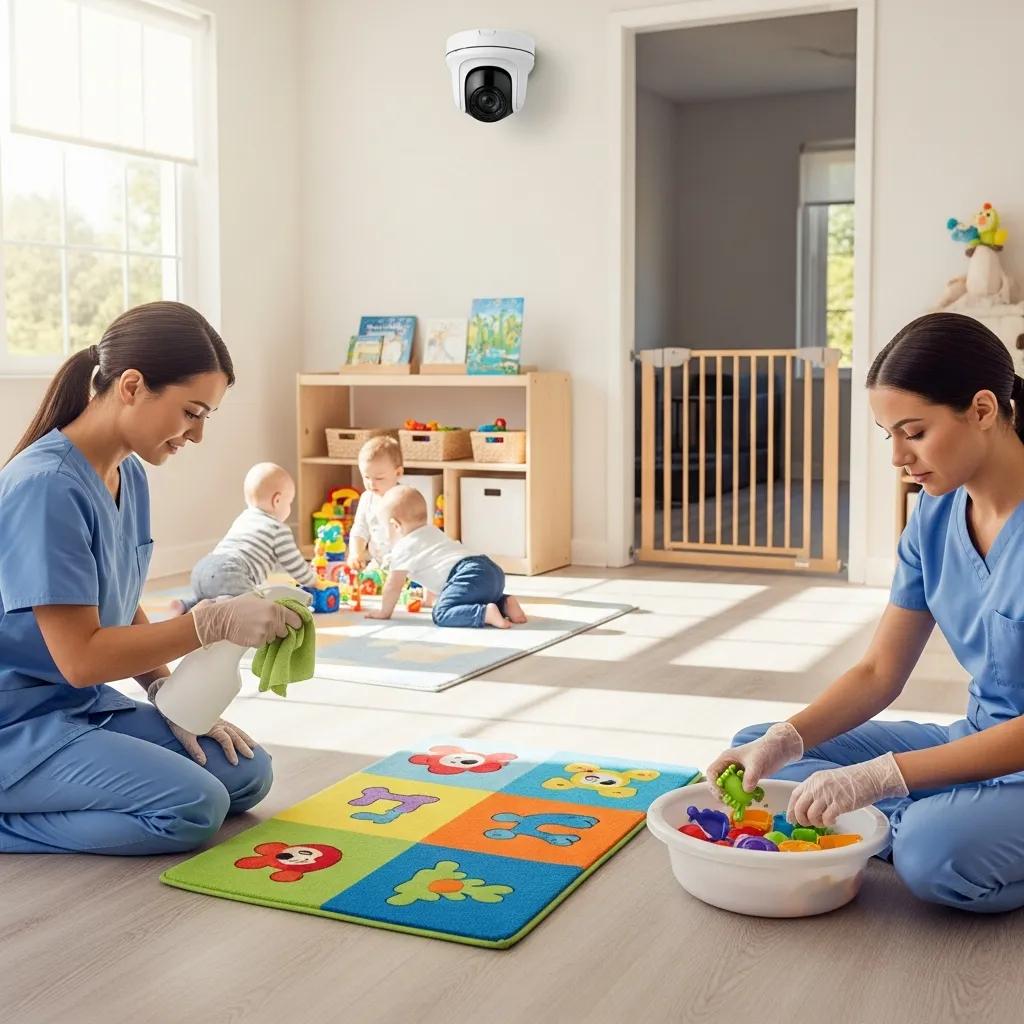
Centers follow state guidance and local best practices to protect children. Common measures include strict cleaning, secure entry systems, and staff trained in first aid and child safety.
- Cleanliness: Daily cleaning of the environment and learning materials to reduce illness.
- Safety Measures: Cameras, secure doors, and alarm systems to control access.
- Staff Qualifications: Employees meet state requirements and receive safety and health training.
These protocols help create a secure setting where parents can feel confident leaving their child.
How Do Enrollment Processes Differ Between Mount Pleasant and Charleston Infant Daycare Centers?
Enrollment steps are similar but vary by facility. Typical requirements include a tour, an application, and any holding fee.
What Are the Steps to Enroll Your Infant in Mount Pleasant Daycare?
Common steps are scheduling a tour, completing an application, and paying an application fee to reserve a spot.
- Schedule a Tour: Visit the facility to meet staff and see routines.
- Complete Application Form: Fill out the required enrollment paperwork, often online.
- Pay Application Fee: A nominal fee (varies by center) may be required to hold enrollment.
The Sweetgrass School encourages parents to email to schedule tours and ask about the enrollment process.
How Does Charleston’s Enrollment Process Compare?
Charleston centers generally follow the same sequence; verify each center’s specific procedures, fees, and documentation requirements.
What Are the Differences in Infant Care Services and Staff Qualifications?
Both areas provide quality infant care, but specific services and staff credentials can differ. Review each program’s offerings to find the best match for your child.
What Qualifications Do Mount Pleasant Infant Daycare Staff Hold?
Staff typically have a high school diploma or GED, relevant experience working with children, and required medical and criminal background checks to ensure safety.
The quality of care often reflects staff training and knowledge of child development.
Childcare Quality: Staff Training & Development Knowledge
ABSTRACT: This study reviewed concerns about quality in family child care homes by examining the relationship between structural indicators (training, education, experience) and process quality (provider engagement). Results indicated that licensure and training were significantly related to process quality. Provider knowledge of child development and health practices predicted process quality above structural measures. The authors offer recommendations for trainers and regulatory agencies.
The relation of quality indicators to provider knowledge of child development in family child care homes, 2000
How Do Charleston Daycare Centers Ensure Quality Infant Care?
Charleston centers require comparable education and experience, with ongoing training and adherence to state regulations to maintain consistent standards.
How Do Pricing and Parent Communication Vary Between Locations?
Costs and communication practices differ based on services, staffing, and facilities. Compare rates and how centers share daily updates when evaluating options.
What Are Typical Costs for Infant Daycare in Mount Pleasant?
Typical infant daycare rates in Mount Pleasant are:
- 2 Days/Week: $520.00
- 3 Days/Week: $650.00
- 5 Days/Week: $765.00
Rates commonly include meals and snacks for added convenience.
How Is Parent Communication Managed in Charleston Daycare Programs?
Charleston programs commonly use daily reports, scheduled meetings, and multiple contact methods to keep parents informed.
- Daily Reports: Summaries of activities, naps, and feeds.
- Face-to-Face Contact: Periodic meetings to discuss development and concerns.
- Communication Methods: Phone, text, and email updates as needed.
Clear communication builds partnership between parents and caregivers and improves the care experience.
Frequently Asked Questions
What should I look for when choosing an infant daycare?
Check cleanliness, safety measures, caregiver warmth and responsiveness, caregiver‑to‑child ratios, and the program’s activities to ensure they align with your family’s values.
How can I prepare my infant for daycare?
Prepare gradually: visit with your child, meet caregivers, and start routines at home similar to the center’s schedule. Practice short separations to ease the transition.
What are the typical hours of operation for infant daycare centers?
Many centers operate roughly 7:30 AM to 5:30 PM; hours vary. Ask each center about part‑time, full‑time, and extended options.
Are there any state regulations for infant daycare providers?
Yes. Providers must meet state rules for staff qualifications, ratios, health and safety, and licensing. Verify compliance before enrolling.
What types of activities are typically included in an infant daycare program?
Common activities include sensory play, music and movement, storytime, simple art, and routines that promote physical, social, and cognitive development adapted to each infant’s needs.
How can I assess the quality of care at a daycare center?
Observe caregiver‑child interactions, check cleanliness and safety features, review staff credentials and turnover, and speak with other parents about their experiences.
Conclusion
Selecting the right infant daycare in Mount Pleasant or Charleston can support your child’s early development and well‑being. Compare services, safety practices, staff qualifications, and communication approaches, then schedule visits to find the best fit for your family.